
 By Marcus Ellison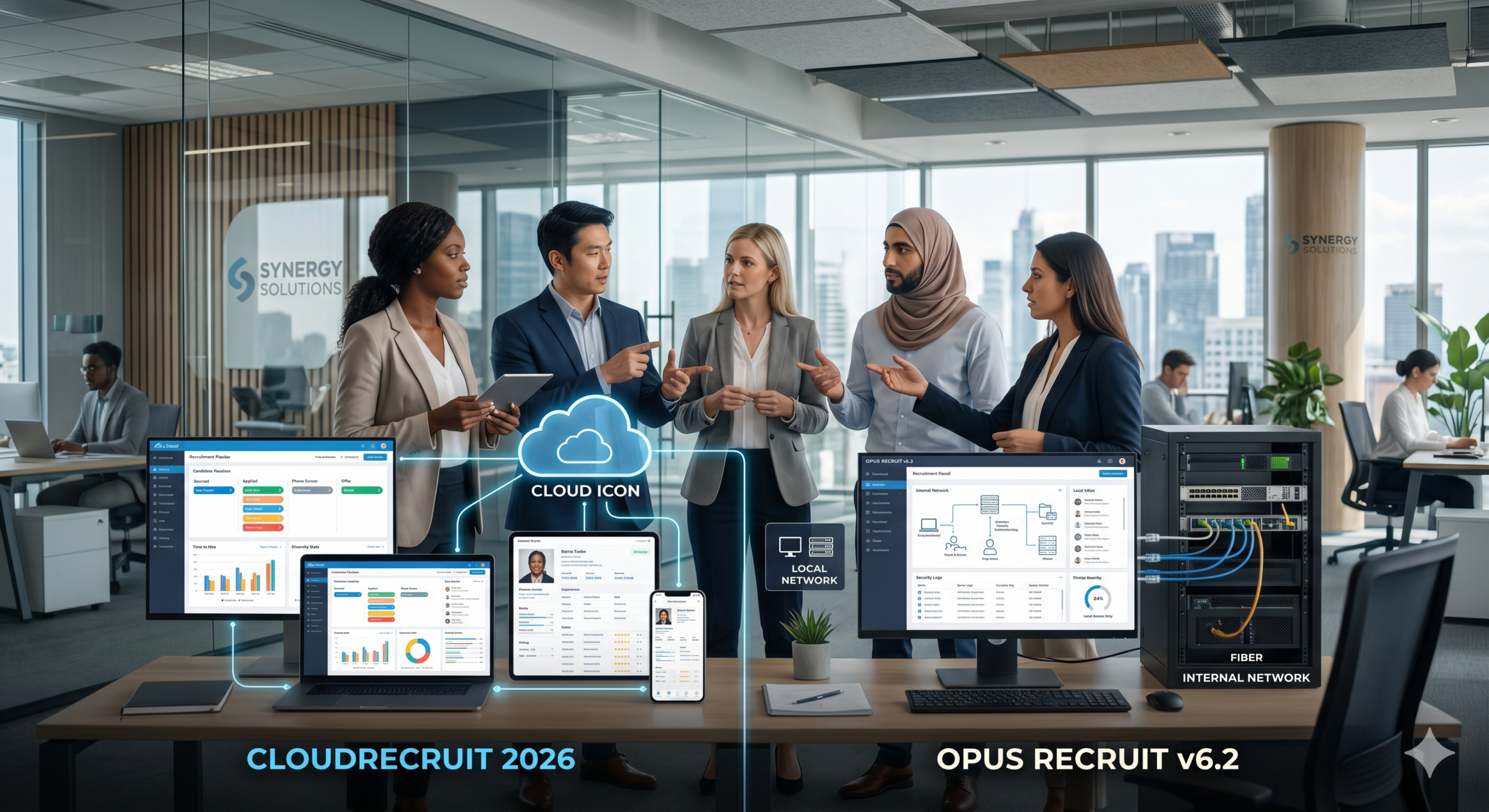
Recruitment technology has become a core driver of business performance. As organizations scale and compete globally, the choice between cloud and on-premise systems directly impacts hiring speed, cost, and efficiency. Understanding the differences between cloud-based vs on-premise ATS solutions is essential for building a recruitment infrastructure that supports long-term growth.
As organizations scale and compete globally, the choice between Cloud vs On-Premise Recruitment systems has a direct impact on speed, security, cost, and hiring efficiency. In 2026, this decision is less about preference and more about aligning infrastructure with long-term business goals.
This comprehensive guide explores the differences between cloud-based and on-premise recruitment systems, helping you determine which approach best fits your organization.
Cloud recruitment software is hosted on remote servers and accessed via the internet. Vendors manage the infrastructure, updates, and security, allowing companies to focus on hiring rather than IT maintenance.
- Web-based access from anywhere
- Automatic updates and maintenance
- Subscription-based pricing
- Scalable infrastructure
- Workday
- Greenhouse Software
On-premise recruitment software is installed and hosted on a company’s internal servers. The organization has full control over data, security, and system customization.
- Local data storage
- Full control over infrastructure
- Custom configurations
- Internal IT management
- Highly regulated industries
- Organizations with strict data governance policies
- Companies with existing IT infrastructure
Understanding the key differences between these two models is essential for making the right decision.
| Feature | Cloud Recruitment Software | On-Premise Recruitment Software |
|---|---|---|
| Deployment | Internet-based | Local servers |
| Cost Structure | Subscription (OPEX) | Upfront investment (CAPEX) |
| Scalability | High | Limited by hardware |
| Maintenance | Vendor-managed | In-house IT |
| Accessibility | Anywhere, anytime | Limited to internal network |
| Security | Vendor-managed + cloud tools | Full internal control |
| Updates | Automatic | Manual |
- Subscription-based pricing
- No hardware investment
- Lower upfront cost
- High initial infrastructure cost
- Ongoing maintenance expenses
- Hardware upgrades required
Cloud solutions reduce upfront investment, while on-premise systems may offer cost advantages over time for large enterprises.
Cloud recruitment systems scale effortlessly. As hiring demands grow, organizations can:
- Add users instantly
- Increase storage capacity
- Expand globally without infrastructure changes
Scaling requires:
- Additional hardware
- IT resources
- Longer deployment timelines
- Accessible from any device
- Supports remote teams
- Enables global hiring
- Limited remote access
- Requires VPN or internal network
- Less flexible for distributed teams
Security is often the deciding factor in the Cloud vs On-Premise Recruitment debate.
- Advanced encryption
- Regular security updates
- Compliance with global standards
- Full control over data
- Custom security protocols
- Higher responsibility for protection
Cloud providers now offer enterprise-grade security, often exceeding what individual organizations can maintain internally.
- Configurable but limited customization
- Vendor-controlled environment
- Full customization
- Complete control over workflows and data
Cloud systems integrate easily with:
- HR platforms
- Payroll systems
- CRM tools
- AI recruitment tools
- Requires custom development
- Limited by internal architecture
AI is transforming recruitment in 2026.
- Built-in AI tools
- Predictive analytics
- Automated candidate screening
- Custom AI integration possible
- Requires development resources
Cloud recruitment software offers flexibility, affordability, and quick deployment.
Large companies may choose hybrid models or on-premise systems for control and compliance.
On-premise solutions are preferred where strict data control is required.
Pros:
- Scalable and flexible
- Lower upfront cost
- Easy access and collaboration
- Automatic updates
Cons:
- Less control over infrastructure
- Ongoing subscription costs
- Dependence on vendor
Pros:
- Full control over data
- High customization
- Strong internal security
Cons:
- High upfront cost
- Maintenance responsibility
- Limited scalability
Choosing the right system depends on your organization’s priorities.
- What is your budget structure (CAPEX vs OPEX)?
- How important is scalability?
- Do you require full data control?
- What are your compliance requirements?
- Do you support remote or global teams?
- You need flexibility and scalability
- You want quick deployment
- You support remote hiring
- You require full data control
- You have strict compliance needs
- You have strong internal IT resources
Organizations combine cloud flexibility with on-premise control.
AI is becoming standard in recruitment systems.
Cloud platforms enable worldwide hiring strategies.
Analytics and insights drive better hiring outcomes.
- Define recruitment goals clearly
- Evaluate total cost of ownership
- Ensure data security compliance
- Train HR and IT teams
- Monitor system performance regularly
The Cloud vs On-Premise Recruitment decision is about balancing flexibility and control.
- Cloud systems offer scalability, speed, and innovation
- On-premise systems provide control, customization, and security
In 2026, many organizations are adopting hybrid approaches—leveraging the strengths of both models to build resilient and efficient recruitment systems.