
 By Marcus Ellison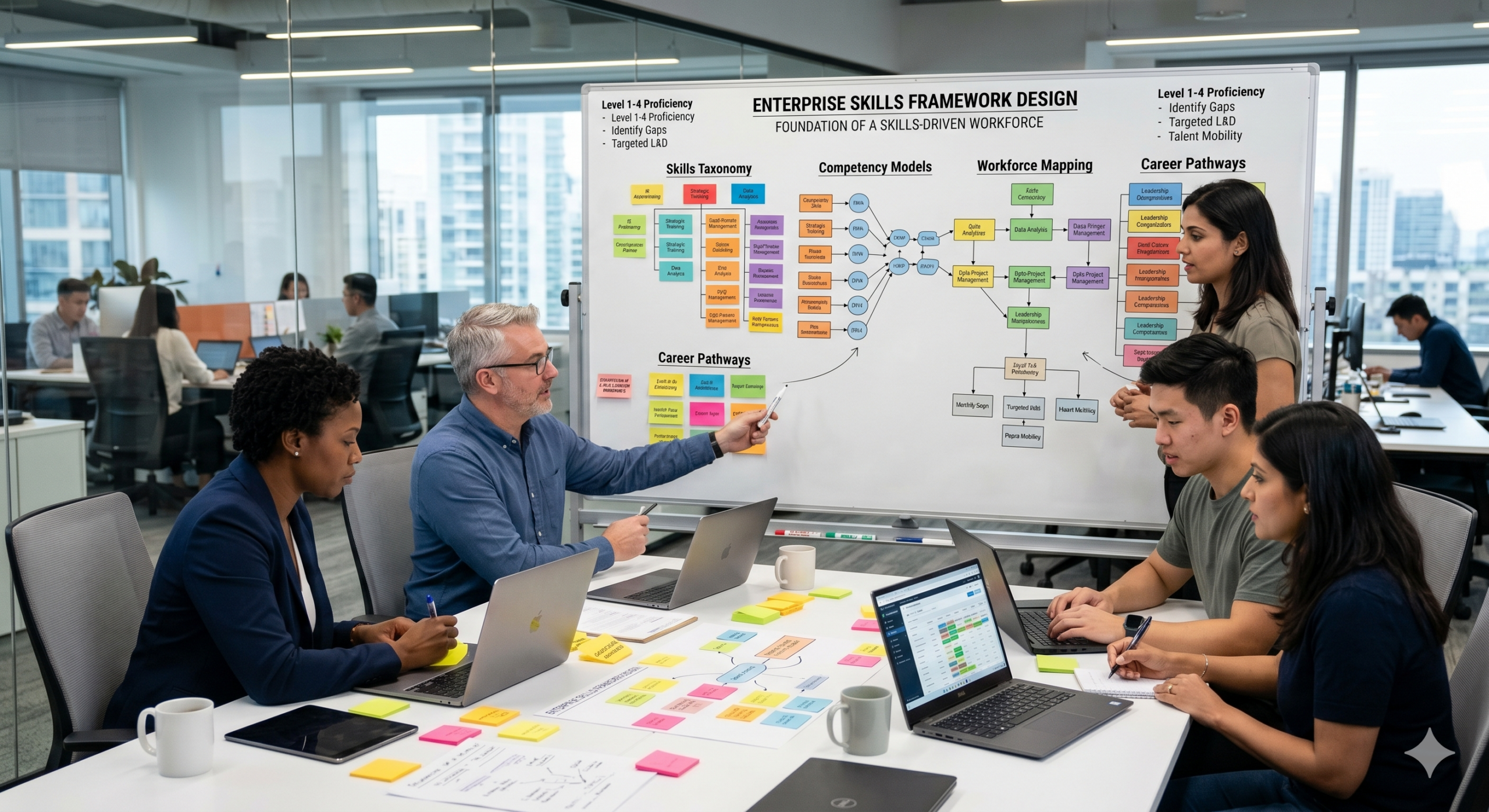
Organizations have spent decades building workforce strategies around job titles, departments, and organizational charts. While those structures still serve an important purpose, they no longer provide a complete picture of workforce capability. Today’s business environment moves too quickly for organizations to rely solely on traditional job descriptions. Technology evolves at a rapid pace. Customer expectations continue to change. New business models emerge regularly. As a result, the skills required for success today may look very different from the skills required just a few years from now.
As a Human Resources and Recruiting Specialist, I have seen many organizations struggle with a common problem. They know how many employees they have and where those employees work. However, they often lack a clear understanding of the capabilities that exist within their workforce. Leaders frequently ask questions about talent readiness, skill shortages, future workforce needs, and succession planning. Unfortunately, many organizations do not have a structured system that can provide reliable answers.
This challenge has led to the growing importance of Enterprise Skills Framework Design. Organizations are increasingly recognizing that workforce success depends on understanding skills at a much deeper level. Rather than focusing only on job titles, they are focusing on capabilities. They want to know what employees can do today and what they can potentially do in the future.
Enterprise Skills Framework Design provides a structured approach for identifying, organizing, measuring, and developing workforce capabilities. It creates a common language for talent management and helps organizations align workforce strategies with business objectives. At the heart of this approach are two critical concepts: skills taxonomy and competency modeling.
Together, these frameworks help organizations build a stronger understanding of workforce capability. They also improve hiring, employee development, workforce planning, succession management, and organizational agility.
Why Organizations Are Moving Toward Skills-Based Workforce Planning
The modern workplace has changed dramatically. A decade ago, many organizations could predict workforce requirements several years in advance. Today, that level of certainty is becoming increasingly difficult.
Digital transformation has accelerated business change across nearly every industry. New technologies continue to emerge. Automation is reshaping traditional roles. Artificial intelligence is influencing how work is performed. Employees are also developing new expectations regarding career growth and professional development.
These changes have exposed the limitations of traditional workforce planning models. Job descriptions often become outdated within a short period of time. Positions evolve faster than documentation can keep pace. As a result, organizations may continue hiring for outdated requirements while overlooking the capabilities that are becoming increasingly important.
This is why skills-based workforce planning has gained significant attention. Rather than focusing solely on positions, organizations focus on capabilities. They examine which skills exist within the workforce and which skills will be required in the future. This approach provides greater flexibility and helps organizations adapt more quickly to changing business demands.
Enterprise Skills Framework Design supports this transition by creating a structured foundation for identifying and managing workforce capabilities. Instead of relying on assumptions, leaders gain access to more meaningful workforce intelligence.
Understanding Skills Taxonomy
A skills taxonomy is a structured system used to organize and classify workforce skills. It creates consistency across the organization and helps employees, managers, recruiters, and executives speak the same language when discussing talent.
Without a skills taxonomy, organizations often experience confusion. Different departments may use different terms to describe similar capabilities. One team may refer to customer engagement while another uses stakeholder communication. A third team may describe relationship management. Although these capabilities overlap, they may be treated as separate skills because no standardized framework exists.
A skills taxonomy solves this problem by creating clear definitions and relationships between skills. It organizes capabilities into logical categories and subcategories. This structure makes it easier to identify, assess, and develop workforce capabilities.
A well-designed skills taxonomy typically begins with broad capability areas such as leadership, technology, operations, customer service, finance, marketing, sales, and human resources. Within these categories, more specific competencies and skills are defined. This hierarchical structure helps organizations maintain consistency while supporting workforce planning and talent management initiatives.
The value of a skills taxonomy extends beyond organization. It also creates visibility. Leaders gain a clearer understanding of workforce strengths and weaknesses. Recruiters gain better hiring criteria. Employees gain greater clarity regarding career development expectations.
How Competency Modeling Defines Performance
While skills taxonomy focuses on organizing skills, competency modeling focuses on performance. It helps organizations define what successful performance looks like within specific roles and functions.
Many people mistakenly assume that skills and competencies are the same. In reality, they serve different purposes.
A skill represents the ability to perform a specific task. Examples include conducting interviews, creating reports, managing projects, or using software applications.
A competency is broader. It combines skills with knowledge, behaviors, judgment, experience, and application. Competencies explain how individuals use their skills to achieve successful outcomes.
Leadership provides a useful example. Leadership is not a single skill. It involves communication, decision-making, emotional intelligence, coaching, conflict resolution, accountability, and strategic thinking. Together, these elements create the competency of leadership.
Competency modeling helps organizations identify the behaviors and capabilities that contribute to success. This creates greater consistency in hiring, performance management, employee development, and succession planning.
Building an Effective Enterprise Skills Framework Design
Creating an effective Enterprise Skills Framework Design requires more than compiling a list of skills. The framework must align with business strategy and organizational objectives.
The process usually begins with identifying the capabilities that support business success. Organizations should focus on current priorities while also considering future workforce requirements. This ensures the framework remains relevant as business needs evolve.
The next step involves organizing skills into logical categories. Clear definitions are essential. Employees and managers must understand exactly what each skill represents. Ambiguous descriptions often create confusion and reduce framework effectiveness.
Proficiency levels should also be established. These levels help organizations measure capability development and identify workforce readiness. Employees gain a better understanding of expectations, while managers gain a more objective approach to evaluating performance.
An effective framework should remain practical. Overly complex systems often become difficult to maintain. Simplicity encourages adoption and increases long-term value.
The Role of Enterprise Skills Framework Design in Recruitment
Recruitment is one of the areas where skills frameworks create immediate value. Traditional hiring practices often emphasize degrees, certifications, and years of experience. While these factors remain important, they do not always predict performance accurately.
Skills-based hiring focuses on capability rather than credentials alone. Recruiters can evaluate candidates against clearly defined skill requirements. Hiring managers gain greater confidence in selection decisions because evaluations are based on measurable criteria.
This approach also expands talent pools. Organizations can identify candidates with transferable skills who may have been overlooked under traditional hiring models. As a result, companies often improve hiring quality while increasing workforce diversity.
Enterprise Skills Framework Design and Employee Development
Employees want clarity regarding career growth. They want to understand what skills they need to develop and what opportunities exist within the organization.
Enterprise Skills Framework Design provides that clarity. Employees can see how skills connect to career pathways and advancement opportunities. Development becomes more purposeful because learning activities align with clearly defined capability requirements.
Managers also benefit. They can provide more targeted coaching and development support. Learning and development teams can create programs that address specific skill gaps rather than offering generic training initiatives.
This alignment improves employee engagement and strengthens talent retention.
Workforce Planning Through Skills Intelligence
Workforce planning becomes more effective when organizations understand their capabilities. Traditional workforce planning often focuses on headcount. Skills-based workforce planning focuses on capability.
This distinction is important. Two employees may hold the same job title while possessing very different skills. Understanding those differences provides deeper workforce insight.
Enterprise Skills Framework Design allows organizations to identify capability gaps, succession risks, and future workforce requirements. Leaders can make more informed decisions regarding hiring, reskilling, and talent investments.
This capability becomes increasingly valuable as industries continue to evolve.
Common Mistakes Organizations Should Avoid
Many skills framework initiatives fail because they become overly complicated. Organizations sometimes attempt to document every possible skill across every role. The result is often a framework that few employees use.
Another common mistake is treating the initiative solely as an HR project. Successful frameworks require input from business leaders, managers, subject matter experts, and employees.
Organizations should also avoid creating static frameworks. Skills requirements continue to evolve. Regular reviews help ensure the framework remains aligned with changing business needs.
Conclusion
Enterprise Skills Framework Design is becoming a critical component of modern workforce strategy. Organizations can no longer rely solely on job titles and traditional workforce planning methods. Business environments are changing too quickly. Skills have become one of the most valuable assets an organization possesses.
By combining skills taxonomy and competency modeling, organizations gain a clearer understanding of workforce capability. They improve hiring decisions, strengthen employee development, support workforce planning, and create greater organizational agility.
Companies that invest in Enterprise Skills Framework Design today will be better prepared for future workforce challenges. They will understand their talent more effectively and create stronger opportunities for long-term growth. Most importantly, they will build organizations that can adapt and thrive in an increasingly skills-driven economy.
Frequently Asked Questions
What is Enterprise Skills Framework Design?
Enterprise Skills Framework Design is a structured approach for identifying, organizing, measuring, and managing workforce skills and competencies across an organization.
Why is Enterprise Skills Framework Design important?
It helps organizations improve hiring, workforce planning, employee development, succession planning, and organizational agility.
What is the difference between a skill and a competency?
A skill is the ability to perform a specific task. A competency combines skills, knowledge, behaviors, and experience to achieve successful performance.
How does a skills taxonomy support workforce planning?
A skills taxonomy creates a consistent structure for identifying workforce capabilities and skill gaps. This improves workforce planning and talent management decisions.
Can small organizations benefit from skills frameworks?
Yes. Small and medium-sized organizations often benefit because structured workforce practices support growth and scalability.
References and Further Reading
- AIHR – Skills Taxonomy Guide
- Udemy Business – Building a Skills Taxonomy
- Visier – Skills Taxonomy Explained
- iMocha – Skills-Based Workforce Planning
- SHRM – Human Resource Competency Frameworks
- Association for Talent Development (ATD)
- LinkedIn Learning Workplace Learning Report