
 By Marcus Ellison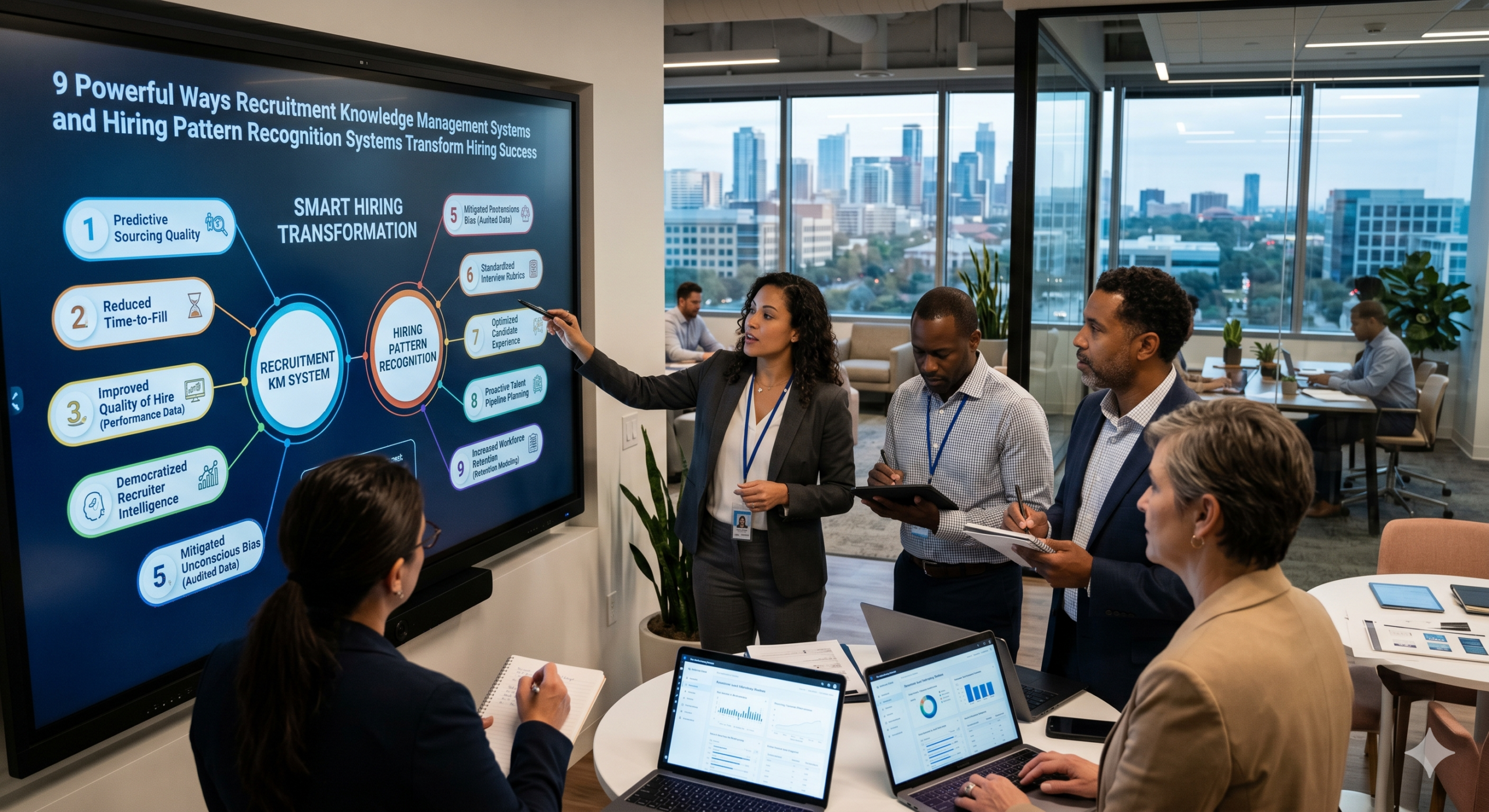
In today’s highly competitive talent market, recruiting is no longer simply about posting job openings, reviewing resumes, conducting interviews, and extending offers to candidates who appear to be a good fit. While those activities remain important, modern talent acquisition has evolved into a strategic business function that directly impacts organizational growth, productivity, innovation, employee retention, and long-term success.
Yet despite significant advances in recruiting technology, many organizations continue to struggle with an issue that rarely receives enough attention. Every day, valuable recruiting knowledge is lost. Recruiters leave organizations. Hiring managers move into new roles. Team structures change. Business priorities shift. Along the way, years of accumulated hiring experience, candidate insights, sourcing techniques, interview observations, and successful recruiting strategies disappear.
As a recruiting professional, I have witnessed this challenge repeatedly. Organizations invest heavily in applicant tracking systems, recruitment marketing platforms, candidate relationship management tools, and workforce planning software, yet they often overlook one of the most valuable assets within their talent acquisition function: organizational hiring intelligence.
This is precisely where Recruitment Knowledge Management Systems become essential. When combined with Hiring Pattern Recognition Systems, they create an internal intelligence layer that helps recruiting teams capture valuable knowledge, identify successful hiring behaviors, learn from previous decisions, and continuously improve future hiring outcomes.
Organizations that understand how to preserve recruiting knowledge and recognize hiring patterns gain a significant competitive advantage because they stop making decisions based solely on intuition and begin leveraging accumulated organizational intelligence.
Understanding Recruitment Knowledge Management Systems
A Recruitment Knowledge Management System is a structured framework that captures, organizes, stores, shares, and applies recruiting knowledge across an organization.
While many companies focus on storing recruiting data, relatively few focus on managing recruiting knowledge.
There is a substantial difference between data and knowledge.
Data consists of facts, numbers, candidate profiles, interview scores, hiring metrics, and application records. Knowledge, on the other hand, represents the understanding gained from those experiences. It answers critical questions such as why a particular sourcing strategy succeeded, why one candidate became a top performer while another struggled, and what hiring decisions consistently produce positive business outcomes.
A Recruitment Knowledge Management System ensures that this valuable intelligence remains accessible long after individual recruiters or hiring managers move on to different roles.
Instead of relying on memory or personal experience, organizations develop a centralized repository of hiring wisdom that becomes more valuable over time.
Why Recruiting Teams Need an Internal Intelligence Layer
One of the most common challenges facing recruiting organizations is the constant loss of institutional knowledge.
Consider a recruiter who spends five years hiring software engineers. During that period, they learn which sourcing channels consistently produce strong candidates, which interview questions reveal genuine technical expertise, and which personality traits often predict long-term success.
If that recruiter leaves the organization and their knowledge has never been documented, the company loses years of practical hiring experience.
The same situation occurs with hiring managers.
Many managers develop effective methods for identifying top talent, recognizing potential concerns, and evaluating cultural alignment. Unfortunately, these insights often remain trapped in individual experience rather than becoming part of the organization’s collective knowledge base.
An internal intelligence layer solves this problem by transforming personal knowledge into organizational knowledge.
Instead of knowledge residing within individuals, it becomes available to the entire recruiting function.
As a result, recruiting teams become more consistent, scalable, and effective.
1. The Growing Importance of Hiring Pattern Recognition Systems
While knowledge management focuses on preserving recruiting intelligence, Hiring Pattern Recognition Systems focus on discovering valuable insights hidden within historical hiring data.
These systems analyze thousands of recruiting interactions, candidate records, interview evaluations, hiring outcomes, and employee performance metrics to identify recurring patterns.
The goal is not simply to understand what happened in the past.
The goal is to understand why it happened and how those insights can improve future hiring decisions.
For example, a Hiring Pattern Recognition System may reveal that candidates sourced through employee referrals consistently achieve higher performance ratings and longer retention periods than candidates sourced through job boards.
Similarly, the system may identify that candidates who demonstrate specific behavioral characteristics during interviews are more likely to succeed within a particular organizational culture.
Without pattern recognition, these relationships often remain hidden.
With pattern recognition, recruiting teams gain visibility into factors that influence hiring success.
2. How Recruitment Knowledge Management Systems Create Better Hiring Decisions
One of the greatest benefits of Recruitment Knowledge Management Systems is their ability to improve decision-making quality.
Recruiters face hundreds of decisions throughout the hiring process. They determine where to source candidates, how to evaluate qualifications, which applicants should advance, and how to advise hiring managers during final selection decisions.
Without access to historical knowledge, these decisions often rely heavily on personal judgment.
While experience is valuable, experience alone can be inconsistent.
Knowledge management systems provide recruiters with access to proven practices, historical outcomes, and organizational learning.
Consequently, hiring decisions become more informed, more consistent, and more aligned with business objectives.
Rather than reinventing processes for every new vacancy, recruiters can build upon lessons learned from previous hiring efforts.
3. The Hidden Cost of Losing Recruiting Knowledge
Many organizations underestimate the financial impact of lost recruiting knowledge.
When hiring intelligence disappears, recruiters spend additional time rebuilding sourcing strategies, rediscovering candidate pipelines, recreating interview frameworks, and learning lessons that previous employees already learned years earlier.
This duplication of effort reduces efficiency and increases hiring costs.
Moreover, lost knowledge often contributes to poor hiring decisions.
A recruiting team that lacks access to historical insights may repeat mistakes that have already occurred multiple times in the past.
For example, they may continue prioritizing credentials that have little correlation with performance while overlooking indicators that consistently predict success.
Over time, these mistakes accumulate and significantly affect workforce quality.
Knowledge management helps prevent this cycle by preserving valuable organizational learning.
4. Why Hiring Pattern Recognition Systems Improve Quality of Hire
Quality of hire remains one of the most important yet challenging recruiting metrics.
Most organizations track metrics such as time-to-fill, cost-per-hire, and application volume. While these measurements provide useful operational information, they do not necessarily indicate whether the organization is hiring the right people.
Hiring Pattern Recognition Systems help solve this problem.
By connecting recruiting data with employee performance outcomes, organizations gain visibility into the factors that predict long-term success.
For instance, a company may discover that candidates with strong problem-solving abilities consistently outperform candidates with more impressive resumes but weaker critical-thinking skills.
Similarly, they may identify interview competencies that strongly correlate with future leadership potential.
These insights allow recruiters to focus on characteristics that genuinely matter rather than relying on assumptions or outdated hiring practices.
5. Building a Centralized Recruiting Knowledge Repository
The foundation of any successful Recruitment Knowledge Management System is a centralized knowledge repository.
This repository serves as the organization’s single source of truth for recruiting intelligence.
Rather than storing information across disconnected spreadsheets, emails, shared drives, and personal notes, knowledge is consolidated into a structured environment that is easily searchable and accessible.
A comprehensive recruiting knowledge repository often includes sourcing strategies, interview guides, hiring playbooks, candidate personas, labor market intelligence, assessment frameworks, onboarding feedback, performance data, and lessons learned from previous hiring initiatives.
As the repository grows, it becomes increasingly valuable.
New recruiters can onboard more quickly. Hiring managers gain access to proven practices. Talent acquisition leaders can identify trends and opportunities more effectively.
Most importantly, organizational learning accumulates rather than disappearing.
6. Reducing Bias Through Knowledge and Pattern Recognition
Bias remains a significant challenge within recruiting.
Even experienced recruiters and hiring managers can unknowingly allow personal preferences, assumptions, or unconscious biases to influence decision-making.
Knowledge management and pattern recognition systems help reduce these risks.
When organizations systematically analyze hiring outcomes, they can identify inconsistencies that may indicate bias within the recruitment process.
For example, they may discover that equally qualified candidates receive different interview evaluations depending on who conducts the assessment.
Alternatively, they may identify stages within the hiring process where diverse candidates are disproportionately screened out.
These insights create opportunities to improve fairness, consistency, and objectivity.
As a result, organizations strengthen both hiring quality and diversity outcomes.
7. How Internal Intelligence Supports Workforce Planning
The benefits of Recruitment Knowledge Management Systems extend beyond immediate hiring activities.
Workforce planning becomes significantly more effective when organizations understand historical hiring trends and talent patterns.
By analyzing previous recruiting outcomes, organizations can anticipate future talent needs more accurately.
They can identify skills that are becoming increasingly difficult to source, predict potential talent shortages, and develop proactive recruiting strategies before challenges become urgent.
This forward-looking approach transforms recruiting from a reactive function into a strategic business partner.
Rather than responding to vacancies after they occur, organizations position themselves to meet future workforce demands more effectively.
8. The Role of Collaboration in Recruitment Knowledge Management
Technology plays an important role in knowledge management, but technology alone is not enough.
Successful systems depend on collaboration.
Recruiters, hiring managers, HR leaders, department heads, and business executives must contribute knowledge, share experiences, and document lessons learned.
When collaboration becomes part of the organizational culture, knowledge management systems become dynamic resources rather than static databases.
Team members continuously add insights, refine best practices, and improve organizational understanding.
Over time, this collaborative learning environment creates a powerful competitive advantage.
The organization becomes smarter with every hiring decision.
9. Common Mistakes Organizations Should Avoid
Despite the benefits of Recruitment Knowledge Management Systems, many implementations fail because organizations focus exclusively on technology.
They purchase sophisticated platforms but neglect governance, participation, and continuous improvement.
Another common mistake involves collecting excessive amounts of information without establishing a clear strategy for how that information will be used.
Knowledge should be actionable.
If recruiters cannot easily find relevant insights or apply them to real hiring decisions, the system loses much of its value.
Organizations should also avoid treating knowledge management as a one-time project.
Successful systems require ongoing maintenance, regular updates, and active engagement from recruiting teams.
Knowledge management is a continuous process rather than a finished destination.
The Future of Hiring Pattern Recognition Systems
The future of recruiting will increasingly depend on intelligence-driven decision-making.
Artificial intelligence, predictive analytics, machine learning, and advanced data modeling will continue expanding the capabilities of Hiring Pattern Recognition Systems.
However, technology alone will not determine success.
Organizations that combine technology with strong knowledge management practices will achieve the greatest results.
The true value lies in transforming historical hiring experiences into practical insights that improve future decisions.
Companies that successfully build internal intelligence layers will hire more effectively, reduce turnover, strengthen workforce quality, and create sustainable competitive advantages.
As talent competition continues to intensify, the ability to learn from every hiring decision will become one of the most valuable capabilities within modern recruiting organizations.
Final Thoughts
Recruiting excellence is not built solely through technology, experience, or intuition.
It emerges when organizations combine all three.
Recruitment Knowledge Management Systems provide the structure needed to capture and preserve valuable hiring intelligence. Hiring Pattern Recognition Systems provide the analytical capability required to uncover meaningful insights hidden within recruiting data.
Together, they create a powerful internal intelligence layer that transforms recruiting from a transactional activity into a strategic business function.
Organizations that embrace this approach gain more than operational efficiency. They gain the ability to continuously learn, adapt, and improve.
Every interview becomes a learning opportunity. Every hiring decision contributes to organizational knowledge. Every successful employee provides insights that can improve future recruiting outcomes.
In a world where talent remains one of the most important competitive advantages, organizations that learn faster will hire better. Those that hire better will build stronger teams. And those stronger teams will ultimately drive long-term business success.
Frequently Asked Questions
What is a Recruitment Knowledge Management System?
A Recruitment Knowledge Management System is a structured framework that captures, stores, organizes, and shares recruiting knowledge so organizations can preserve hiring intelligence and improve future talent acquisition decisions.
What are Hiring Pattern Recognition Systems?
Hiring Pattern Recognition Systems analyze historical hiring data to identify trends, behaviors, and characteristics associated with successful hiring outcomes, employee performance, and retention.
Why are Hiring Pattern Recognition Systems important?
These systems help recruiters make evidence-based decisions by uncovering patterns that may not be visible through traditional recruiting methods, ultimately improving quality of hire and reducing turnover.
How do Recruitment Knowledge Management Systems benefit recruiters?
They provide recruiters with access to historical insights, proven strategies, hiring best practices, and organizational learning that improve efficiency and decision-making quality.
Can knowledge management reduce hiring bias?
Yes. By analyzing hiring decisions and outcomes systematically, organizations can identify inconsistencies, improve objectivity, and create fairer recruitment processes.
How does an internal intelligence layer improve recruiting?
An internal intelligence layer combines recruiting knowledge, hiring outcomes, workforce data, and organizational insights to support smarter and more strategic hiring decisions.
Are Recruitment Knowledge Management Systems suitable for small businesses?
Absolutely. Small and growing businesses often benefit significantly because preserving recruiting knowledge helps maintain consistency, scalability, and hiring effectiveness as the organization expands.
References and Further Reading
- SHRM: Leveraging Talent Intelligence for Better Hiring Decisions — A strong resource explaining how talent intelligence helps organizations improve workforce planning, candidate evaluation, and hiring effectiveness.
- SHRM: Skills Intelligence Will Change HR — Explores how skills intelligence is transforming recruiting, workforce development, and internal talent strategies.
- SHRM: The Complete Guide to Effective Recruiting Practices — Covers modern recruiting frameworks, data-driven hiring strategies, AI recruiting tools, and talent acquisition best practices.
- SHRM: Skills-Based Hiring Requires Commitment to Change — Discusses why organizations are moving toward skills-first hiring models and how hiring intelligence supports better workforce decisions.
- SHRM: Skills-First Hiring Toolkit for Talent Acquisition — A practical guide for implementing skills-first hiring, reducing turnover, and improving recruiting outcomes through structured talent intelligence.
- Talent Analytics: A Practical Guide for Recruiting Teams (Pin) — Provides detailed insights into recruiting analytics, quality-of-hire measurement, hiring metrics, and predictive talent acquisition strategies.
- Hiring Intelligence for Enterprise Recruiting (iMocha) — A comprehensive guide explaining hiring intelligence, AI-powered recruiting, talent analytics, and enterprise hiring optimization.
- Harvard Business Review: Data-Driven Recruiting and Talent Analytics Collection — Excellent leadership-focused content on workforce planning, hiring analytics, organizational intelligence, and talent strategy.
- LinkedIn Talent Solutions Blog — One of the most respected recruiting resources covering hiring trends, talent intelligence, sourcing strategies, and workforce analytics.
- Josh Bersin Company Research Library — Deep research and analysis on HR technology, recruiting intelligence, workforce planning, and talent acquisition transformation.
- Recruiting Daily: Recruiting Intelligence and Talent Technology Insights — Industry-focused articles covering recruiting operations, AI recruiting, hiring data, and recruitment technology trends.
- Gartner HR Research on Talent Acquisition Technology — Research-driven insights into recruiting systems, workforce intelligence, HR technology, and future hiring strategies.