
 By Marcus Ellison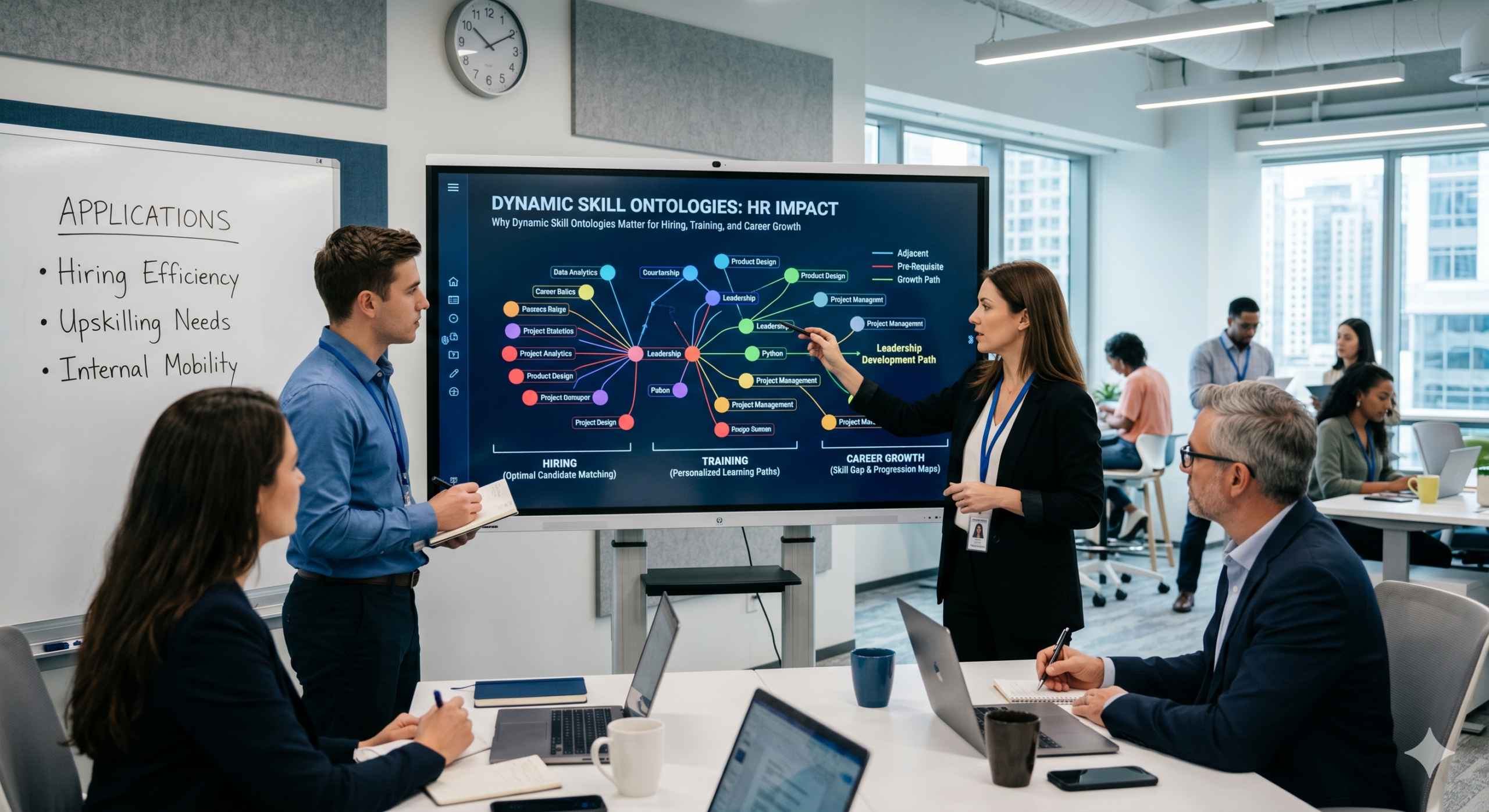
For decades, organizations built their workforce strategies around job titles, organizational charts, educational credentials, and years of experience. Recruiters searched for candidates who matched a specific role description, managers evaluated employees based on position requirements, and learning teams designed training programs according to departmental needs. While this approach served businesses reasonably well during periods of slower economic and technological change, it is becoming increasingly inadequate in today’s environment, where new technologies emerge rapidly, business models evolve continuously, and employees are expected to develop new capabilities throughout their careers.
As someone who has spent years working in recruitment, talent acquisition, workforce planning, and employee development, I have witnessed a dramatic shift in how organizations think about talent. Companies are no longer asking only, “Who can fill this position?” Instead, they are asking much deeper questions. What skills exist within our workforce? Which competencies will we need in the future? How can we identify hidden talent inside our organization? How do we create meaningful career pathways that keep employees engaged while meeting evolving business demands?
The answer to these questions lies in two interconnected disciplines: Skills Taxonomy and Competency Modeling. More specifically, the future of workforce intelligence is increasingly being driven by Dynamic Skill Ontologies, which provide organizations with a living, evolving framework for understanding how skills, competencies, knowledge, experiences, and behaviors connect across the enterprise.
While the terminology may sound technical, the underlying concept is remarkably human. Dynamic Skill Ontologies help organizations understand people more accurately, develop talent more effectively, and make smarter workforce decisions based on actual capabilities rather than assumptions, titles, or outdated job descriptions.
Why Organizations Are Moving Beyond Traditional Job Descriptions
One of the biggest misconceptions in talent management is the belief that job descriptions accurately define what it takes to succeed in a role. In reality, most job descriptions provide only a partial picture of performance requirements, and many become outdated almost immediately after they are written.
I have reviewed thousands of job descriptions throughout my career, and one recurring pattern stands out. Many documents contain lengthy lists of responsibilities and qualifications that have little connection to the daily realities of the role. Some include requirements that were relevant five years ago but are no longer essential today. Others focus heavily on technical expertise while overlooking critical behavioral competencies such as adaptability, communication, collaboration, leadership, and problem-solving.
This disconnect often creates hiring challenges because organizations end up recruiting for credentials instead of capabilities. A candidate may possess the exact degree, certification, and years of experience listed in the job description yet struggle to perform effectively once hired. Conversely, another candidate may lack a specific credential but possess exceptional competencies that would enable them to thrive in the role.
This is precisely why competency modeling has become so important. Competency modeling shifts the conversation away from job requirements and toward performance drivers. Instead of asking whether someone has held a particular title before, organizations begin examining the skills, behaviors, knowledge areas, and personal attributes that consistently contribute to success.
The result is a more accurate understanding of talent and a more strategic approach to workforce management.
Understanding Skills Taxonomy as the Foundation of Workforce Intelligence
A Skills Taxonomy can best be described as a structured framework that organizes skills into logical categories and relationships. Think of it as a comprehensive map of workforce capabilities that creates consistency across recruiting, learning, performance management, workforce planning, and career development.
Without a skills taxonomy, different departments often use different language to describe the same capabilities. A recruiter might refer to stakeholder management, while a manager describes relationship-building. One department may discuss business analysis, while another references process improvement. Although these concepts may overlap significantly, the absence of a common language creates confusion and makes workforce data difficult to analyze.
A well-designed skills taxonomy eliminates this problem by establishing a standardized vocabulary that everyone in the organization can use consistently.
For example, communication may serve as a parent category within the taxonomy. Under that category, organizations might define presentation skills, negotiation, active listening, conflict resolution, executive communication, public speaking, and stakeholder engagement. Similarly, leadership may encompass coaching, mentoring, strategic thinking, decision-making, change management, and team development.
The value of this structure extends far beyond organization. Once skills are categorized consistently, businesses can begin measuring workforce capabilities more accurately, identifying skill gaps more effectively, and aligning talent strategies with long-term business objectives.
Perhaps most importantly, a skills taxonomy creates visibility. Organizations cannot develop, manage, or deploy skills they cannot clearly identify. The taxonomy becomes the foundation upon which all workforce intelligence is built.
The Evolution Toward Dynamic Skill Ontologies
While skills taxonomies provide structure, Dynamic Skill Ontologies introduce a much deeper level of intelligence.
A taxonomy organizes skills into categories. An ontology explains how those skills relate to one another.
This distinction is significant because skills rarely exist in isolation. Every capability is connected to multiple competencies, knowledge domains, experiences, and performance outcomes. For example, project management does not operate independently. It connects to communication, leadership, risk management, budgeting, stakeholder engagement, strategic planning, and problem-solving. Similarly, data analytics may connect to business intelligence, critical thinking, data visualization, statistical analysis, and decision support.
A Dynamic Skill Ontology maps these relationships and continuously evolves as workforce demands change.
The word dynamic is especially important because today’s workforce operates in an environment characterized by constant transformation. Emerging technologies, changing customer expectations, automation, artificial intelligence, and new business models are creating entirely new skill requirements at an unprecedented pace.
Ten years ago, very few organizations were actively recruiting for AI governance specialists, prompt engineers, cloud security architects, machine learning operations professionals, or digital transformation strategists. Today, these skills are becoming increasingly valuable across multiple industries.
Traditional competency frameworks often struggle to adapt to such rapid change because they are typically reviewed only periodically. Dynamic Skill Ontologies, by contrast, are designed to evolve continuously, ensuring that workforce intelligence remains aligned with current and future business needs.
Why Competency Modeling Matters More Than Ever
Competency modeling is often misunderstood as a simple list of desirable traits. In reality, effective competency modeling is a sophisticated process that identifies the underlying characteristics that separate exceptional performers from average performers.
Throughout my recruiting career, I have frequently observed situations where two candidates possessed similar educational backgrounds and professional experience yet delivered dramatically different results after being hired. The difference was not necessarily technical expertise. More often, it involved competencies such as adaptability, resilience, emotional intelligence, collaboration, critical thinking, accountability, or leadership potential.
Competency modeling helps organizations identify these differentiators.
Rather than focusing exclusively on what employees know, competency models examine how employees apply their knowledge in real-world situations. They explore how individuals solve problems, communicate under pressure, manage relationships, navigate uncertainty, and contribute to organizational objectives.
This deeper understanding allows businesses to make better hiring decisions, create more targeted development programs, improve succession planning, and establish clearer performance expectations.
As labor markets become increasingly competitive and skill requirements continue evolving, competency modeling provides organizations with a strategic advantage by helping them identify talent with greater precision.
How Dynamic Skill Ontologies Improve Recruitment and Hiring
Recruitment is one of the areas where Dynamic Skill Ontologies can create immediate and measurable value.
Traditional recruiting processes often rely heavily on keyword matching, job titles, educational credentials, and years of experience. While these factors can provide useful information, they frequently fail to capture a candidate’s full potential.
Dynamic Skill Ontologies enable recruiters to evaluate candidates based on interconnected capabilities rather than isolated qualifications. Instead of searching exclusively for individuals who have held a specific role, recruiters can identify candidates whose skills and competencies align closely with organizational needs, even if their career paths appear unconventional.
This approach expands talent pools significantly while reducing reliance on rigid qualification requirements.
For example, a candidate with experience in customer success may possess competencies that translate effectively into project management, account management, operations leadership, or business development. Traditional hiring methods might overlook this potential because the job titles do not match perfectly. Dynamic Skill Ontologies reveal these hidden connections and help recruiters make more informed decisions.
As organizations increasingly embrace skills-based hiring, the ability to identify transferable competencies will become a critical competitive advantage.
Internal Mobility and Talent Visibility
One of the most overlooked opportunities in workforce management is internal mobility.
Organizations frequently spend substantial resources attracting external candidates while overlooking employees who already possess the necessary capabilities to fill open positions. This issue typically arises because managers understand what employees currently do but have limited visibility into what employees are capable of doing.
Dynamic Skill Ontologies help solve this challenge by creating comprehensive skill profiles that capture a broader picture of workforce capabilities.
When organizations understand the full range of competencies possessed by their employees, they can identify internal candidates for promotions, lateral moves, project assignments, leadership development programs, and succession planning initiatives.
This visibility benefits both employers and employees. Organizations reduce hiring costs, improve retention rates, and strengthen workforce agility. Employees gain access to career opportunities that align with their evolving skills and aspirations.
In an era where employee engagement and retention have become strategic priorities, internal mobility supported by Dynamic Skill Ontologies offers a powerful solution.
Workforce Planning in an Uncertain Future
Workforce planning has become increasingly complex because business environments are changing faster than ever before.
Leaders must constantly evaluate whether their organizations possess the capabilities needed to achieve future objectives. They must anticipate emerging skill requirements, identify capability gaps, and develop strategies for addressing workforce shortages before they become critical business problems.
Without structured skill intelligence, these decisions are often based on assumptions.
Dynamic Skill Ontologies provide a more reliable foundation by offering real-time visibility into workforce capabilities. Organizations can identify which skills are growing, which competencies are declining in relevance, and which areas require immediate investment.
This proactive approach enables businesses to prepare for future challenges rather than simply reacting to them after they occur.
As digital transformation accelerates across industries, workforce planning will increasingly depend on organizations’ ability to understand and manage skill ecosystems effectively.
Learning and Development in the Age of Skills Intelligence
Employee development is another area undergoing significant transformation.
Historically, learning programs were often designed around generic training catalogs that offered limited personalization. Employees selected courses based on availability or personal interest rather than strategic development needs.
Dynamic Skill Ontologies change this approach entirely.
Because skill relationships are mapped comprehensively, organizations can identify specific competency gaps and recommend targeted learning experiences that support both individual career goals and business objectives.
Employees gain greater clarity regarding which skills they need to develop. Managers can create more effective development plans. Learning teams can allocate resources more strategically.
Most importantly, development becomes connected directly to measurable outcomes rather than isolated training activities.
This alignment increases the effectiveness of learning investments while supporting continuous workforce growth.
The Human Element Behind Workforce Intelligence
Despite advances in technology, workforce intelligence remains fundamentally about people.
One of the biggest mistakes organizations make is treating competency modeling and skill frameworks as purely data-driven exercises. While technology can identify patterns and relationships, human expertise remains essential.
The most successful competency models are developed through collaboration between HR professionals, recruiters, business leaders, managers, subject matter experts, and employees themselves.
These stakeholders provide insights that data alone cannot capture. They understand organizational culture, performance expectations, leadership behaviors, and workplace dynamics.
Dynamic Skill Ontologies work best when they combine analytical rigor with human understanding.
Technology may provide visibility, but people provide meaning.
The Future of Dynamic Skill Ontologies
As organizations continue shifting toward skills-based workforce strategies, Dynamic Skill Ontologies will play an increasingly central role in talent management.
The future workplace will likely be characterized by continuous learning, fluid career pathways, cross-functional collaboration, and rapidly evolving skill requirements. Traditional workforce models built around static job descriptions and rigid organizational structures will struggle to keep pace.
Dynamic Skill Ontologies offer a more adaptive framework because they recognize that skills are interconnected, competencies evolve over time, and workforce capabilities must be managed as living systems rather than fixed assets.
Organizations that embrace this approach will be better positioned to attract talent, develop employees, improve workforce agility, and navigate uncertainty.
More importantly, they will gain a deeper understanding of their most valuable asset: their people.
Conclusion
The rise of Dynamic Skill Ontologies represents one of the most significant developments in modern Human Resources, recruitment, and workforce planning. As organizations move beyond traditional job descriptions and static competency frameworks, they are discovering the value of understanding talent through a more comprehensive and interconnected lens.
Skills Taxonomy provides the structure. Competency Modeling provides the context. Dynamic Skill Ontologies provide the intelligence that connects everything together.
Together, these frameworks enable organizations to make smarter hiring decisions, identify hidden talent, improve employee development, strengthen workforce planning, support internal mobility, and build more agile organizations capable of adapting to constant change.
In the years ahead, businesses that successfully leverage Dynamic Skill Ontologies will not simply manage talent more effectively. They will create workforce ecosystems where skills are visible, competencies are understood, potential is recognized, and people are empowered to grow continuously alongside the organizations they serve.
The FAQ and References sections should remain in the article because they help with Yoast SEO, increase topical authority, improve user experience, and provide opportunities for rich search results. Here is an expanded version you can place near the end of the article before the conclusion or immediately after it.
Frequently Asked Questions (FAQ)
What are Dynamic Skill Ontologies?
Dynamic Skill Ontologies are structured frameworks that map relationships between skills, competencies, knowledge areas, job roles, and business objectives. Unlike traditional skill libraries, they continuously evolve as industries, technologies, and workforce needs change. This dynamic approach helps organizations maintain an accurate view of employee capabilities while adapting to emerging skill requirements.
How are Dynamic Skill Ontologies different from a Skills Taxonomy?
A Skills Taxonomy focuses on organizing and categorizing skills into a structured hierarchy. It creates a common language for identifying workforce capabilities. Dynamic Skill Ontologies go a step further by connecting skills to competencies, experiences, certifications, job functions, learning pathways, and performance outcomes. In simple terms, a taxonomy organizes skills, while an ontology explains how those skills relate to one another.
Why is Competency Modeling important in modern organizations?
Competency Modeling helps organizations identify the behaviors, knowledge, skills, and personal attributes that drive successful job performance. Instead of relying solely on job titles or years of experience, companies can make more informed hiring, promotion, and development decisions by understanding what truly contributes to workplace success.
How do Dynamic Skill Ontologies improve hiring?
Dynamic Skill Ontologies help recruiters identify transferable skills and related competencies that might otherwise be overlooked. This allows organizations to find qualified candidates based on their actual capabilities rather than matching resumes strictly to job titles. As a result, hiring becomes more accurate, inclusive, and effective.
Can Dynamic Skill Ontologies support internal mobility?
Yes. One of the greatest advantages of Dynamic Skill Ontologies is increased visibility into employee capabilities. Organizations can identify hidden talent, match employees with internal opportunities, and create personalized career pathways. This improves employee engagement, retention, and workforce flexibility.
How do Dynamic Skill Ontologies help workforce planning?
Workforce planning depends on understanding current capabilities and future skill requirements. Dynamic Skill Ontologies provide organizations with a comprehensive view of existing skills, emerging competency needs, and potential gaps. This enables leaders to make strategic decisions about hiring, training, succession planning, and talent development.
What role does artificial intelligence play in Skills Taxonomy and Competency Modeling?
Artificial intelligence can analyze large amounts of workforce data to identify skill patterns, emerging competencies, and talent trends. However, AI works best when combined with human expertise. HR professionals, managers, and subject matter experts remain essential for validating competency frameworks and ensuring they align with organizational goals.
Why are organizations shifting toward skills-based hiring?
Many companies are discovering that job titles and educational credentials do not always predict success. Skills-based hiring focuses on capabilities rather than traditional qualifications, allowing organizations to access broader talent pools and identify candidates who possess the competencies needed to perform effectively.
How often should a competency framework be updated?
Organizations should review competency frameworks regularly, especially in industries experiencing rapid technological or market changes. Dynamic Skill Ontologies support continuous updates, helping businesses keep their workforce strategies aligned with evolving demands.
What is the future of Skills Taxonomy and Competency Modeling?
The future lies in skills-based organizations where talent decisions are driven by capabilities rather than rigid job structures. Dynamic Skill Ontologies will play a central role in helping businesses manage workforce transformation, improve employee development, and remain competitive in an increasingly dynamic labor market.
References and Further Reading
For readers interested in learning more about Skills Taxonomy, Competency Modeling, workforce intelligence, and Dynamic Skill Ontologies, the following resources provide valuable insights from leading research organizations, industry experts, and workforce development specialists.
Academic and Research Resources
- Skills Taxonomy and Competency Framework Research
- Competency Models and Workforce Development
- Competency Ontologies for Learning and Development
- Taxonomy of Competence Models: Integrative Literature Review
- iMocha Skills Ontology Framework
- Lightcast Skills Taxonomy and Labor Market Intelligence
- Eightfold AI Talent Intelligence Platform
- Workday Skills Cloud
- LinkedIn Economic Graph and Skills Insights