
 By Marcus Ellison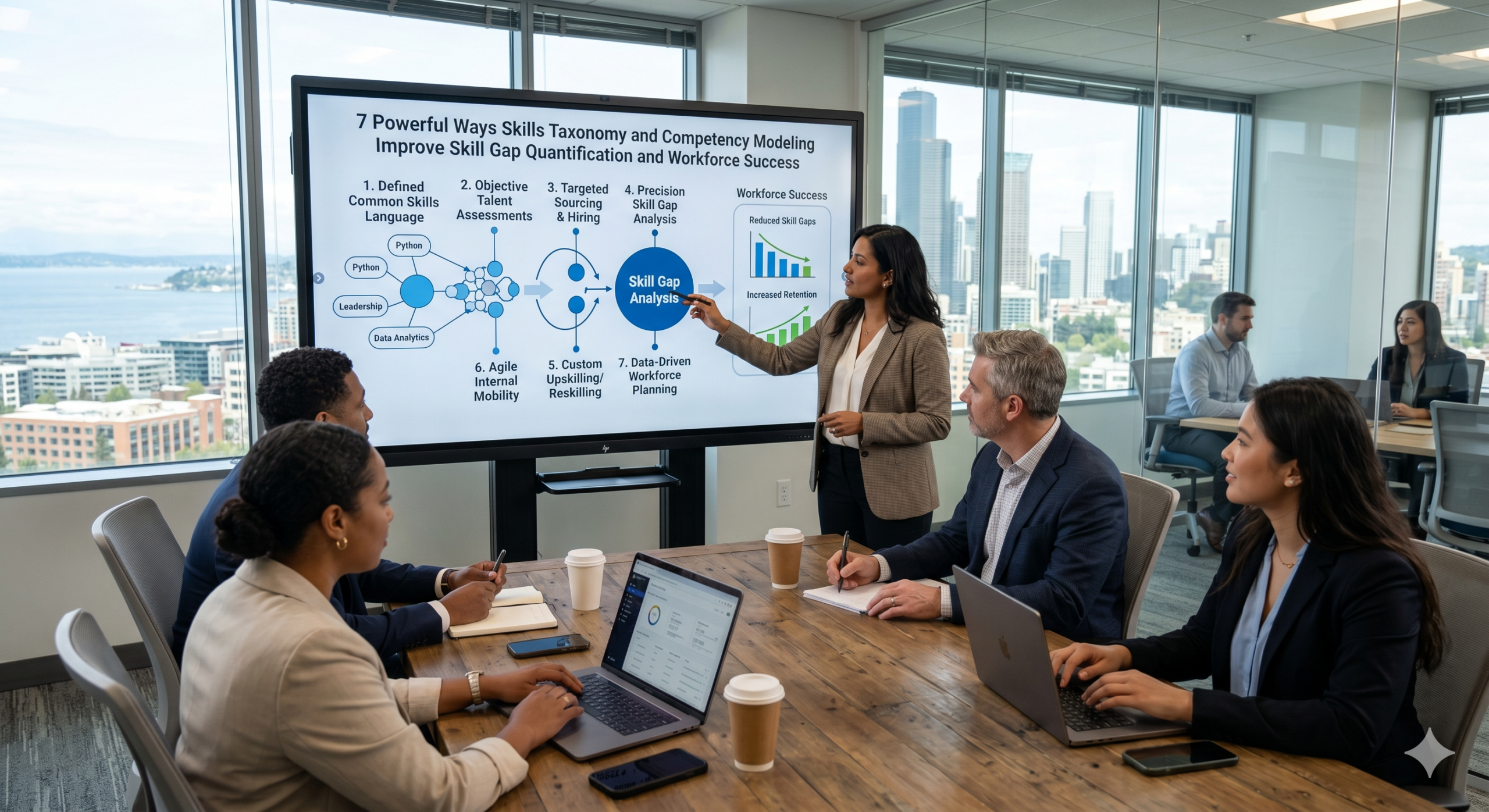
Organizations have never had more access to workforce data than they do today. Human resource teams can track employee performance, monitor learning activities, analyze turnover patterns, and measure recruitment effectiveness with remarkable precision. Yet despite having access to more information than ever before, many companies continue to struggle with a surprisingly simple question: Do we actually have the skills we need to succeed in the future?
As a recruiting specialist and human resource professional, I have seen organizations invest heavily in talent acquisition, leadership development, and employee training programs only to discover that their workforce challenges were not caused by a shortage of people. Instead, the problem was a lack of visibility into skills. Leaders often knew how many employees they had, but they did not truly understand what capabilities those employees possessed, which competencies were missing, and how prepared the workforce was for future business demands.
This challenge has become increasingly important as industries continue to evolve. Technology is changing the nature of work, automation is transforming traditional roles, and new business models are creating demand for skills that barely existed a decade ago. Organizations that rely solely on job titles and outdated job descriptions often struggle to keep pace because they lack a structured way to understand workforce capabilities.
This is where Skills Taxonomy and Competency Modeling become essential.
Together, these frameworks create the foundation for effective workforce planning, talent development, and recruitment strategies. More importantly, they enable accurate Skill Gap Quantification, allowing organizations to measure the difference between current workforce capabilities and future business requirements.
The companies that succeed in the coming years will not necessarily be the ones with the largest workforce. They will be the organizations that understand their skills landscape better than their competitors.
Let us explore seven powerful ways Skills Taxonomy and Competency Modeling improve Skill Gap Quantification and contribute to long-term workforce success.
1. They Create a Common Language for Skills Across the Organization
One of the biggest challenges in workforce planning is inconsistency. Different managers often describe the same capability using different terminology. What one department calls customer relationship management, another may call client engagement, while a third may refer to it as account management. Although these capabilities overlap significantly, the lack of standardization creates confusion when organizations attempt to assess workforce skills.
A Skills Taxonomy solves this problem by creating a structured framework that defines skills consistently throughout the organization. Instead of relying on individual interpretations, everyone works from the same definitions and classifications.
This consistency becomes especially important when conducting Skill Gap Quantification. If managers are using different language to describe similar capabilities, workforce assessments become unreliable. Skill inventories may contain duplicate entries, reporting becomes inaccurate, and development priorities become difficult to identify.
By establishing a common language, organizations gain a clearer understanding of workforce capabilities. Recruiters can identify talent more effectively, managers can evaluate employees more consistently, and executives can make better workforce planning decisions.
Most importantly, accurate Skill Gap Quantification becomes possible because the organization is measuring skills using standardized definitions rather than subjective interpretations.
2. They Improve Hiring Accuracy by Focusing on Capabilities Instead of Titles
For decades, organizations relied heavily on job titles and years of experience when evaluating candidates. While these factors still provide useful information, they often fail to predict actual performance.
I have recruited candidates with impressive resumes who struggled in their roles because they lacked critical competencies. Conversely, I have hired candidates with unconventional backgrounds who excelled because they possessed the right skills and behaviors.
Competency Modeling helps organizations move beyond traditional hiring criteria by identifying the capabilities that truly drive success. Instead of focusing exclusively on education, certifications, or years of experience, recruiters can assess candidates based on demonstrated competencies.
For example, a hiring manager may initially request a candidate with ten years of management experience. However, a competency analysis may reveal that what the role actually requires is strategic thinking, stakeholder management, adaptability, and leadership communication.
When organizations hire based on competencies rather than assumptions, they improve the quality of hiring decisions. They also create more diverse talent pipelines because candidates are evaluated based on capability rather than rigid qualifications.
This approach directly supports Skill Gap Quantification because hiring efforts can be targeted toward specific competency shortages rather than generic staffing needs.
3. They Reveal Hidden Talent Already Inside the Organization
One of the most overlooked aspects of workforce planning is the talent that already exists within the organization.
Many employees possess valuable skills that are not reflected in their current job titles or job descriptions. A customer service representative may have advanced data analytics skills. A project coordinator may possess leadership capabilities that have never been formally recognized. A marketing specialist may have expertise in artificial intelligence tools that could support broader organizational initiatives.
Without a structured Skills Taxonomy, these capabilities often remain hidden.
Competency Modeling provides organizations with a more comprehensive view of workforce talent by identifying skills, behaviors, and knowledge areas beyond current job responsibilities.
This visibility creates significant opportunities for internal mobility and workforce optimization. Instead of immediately looking outside the organization to fill skill gaps, leaders can identify internal candidates who already possess relevant competencies.
From a recruiting perspective, this reduces hiring costs and shortens time-to-fill metrics. From an employee perspective, it creates career growth opportunities and increases engagement.
Most importantly, organizations gain a more accurate picture of existing workforce capabilities, which strengthens the reliability of Skill Gap Quantification efforts.
4. They Make Learning and Development Investments More Effective
Many organizations spend substantial amounts of money on training programs every year. Unfortunately, a significant portion of that investment fails to deliver measurable business results because learning initiatives are often based on assumptions rather than actual workforce needs.
Employees attend workshops, complete online courses, and earn certifications, yet organizational performance remains unchanged.
The reason is simple. Training programs frequently address perceived problems rather than quantified skill gaps.
Skills Taxonomy and Competency Modeling help organizations identify exactly which capabilities require development. Instead of offering broad training programs to large groups of employees, organizations can target specific competencies that directly support business objectives.
For example, an organization undergoing digital transformation may discover through Skill Gap Quantification that employees possess adequate technical knowledge but lack data literacy and analytical thinking skills. This insight allows learning and development teams to create focused programs that address actual capability shortages.
The result is more effective training, better resource allocation, stronger employee engagement, and a higher return on investment.
Employees also benefit because development opportunities become more relevant to their career goals and day-to-day responsibilities.
5. They Strengthen Internal Mobility and Succession Planning
One of the most common complaints employees have about career development is a lack of clarity regarding advancement opportunities.
Many employees want to grow within their organizations but are unsure which capabilities they need to develop in order to qualify for future roles.
Competency Modeling addresses this challenge by creating transparent career pathways.
When competencies are clearly defined, employees can understand the expectations associated with different positions. They can identify their strengths, recognize development opportunities, and create personalized growth plans.
For organizations, this transparency supports succession planning and leadership development. Instead of scrambling to fill leadership vacancies when they occur, companies can proactively identify high-potential employees and prepare them for future responsibilities.
From an HR perspective, this approach reduces turnover and strengthens employee retention because individuals are more likely to remain with organizations that invest in their growth.
Furthermore, accurate Skill Gap Quantification allows leaders to identify competency shortages within leadership pipelines before they become critical business risks.
6. They Support Data-Driven Workforce Planning
Workforce planning has traditionally relied heavily on manager opinions and historical trends. While experience and judgment remain valuable, modern organizations increasingly require data-driven decision-making.
Skills Taxonomy and Competency Modeling provide the structure needed to transform workforce planning into a measurable process.
Instead of asking broad questions such as whether employees need more training, organizations can assess specific competencies and compare them against future business requirements.
This enables leaders to identify emerging skill demands, forecast workforce needs, and allocate resources more strategically.
For example, a company planning to expand its digital services may determine that future growth requires greater expertise in cybersecurity, cloud computing, and data analytics. Through Skill Gap Quantification, leaders can measure current proficiency levels and estimate the investment required to close capability gaps.
This level of insight improves workforce forecasting, budgeting, recruitment planning, and organizational agility.
As industries continue to evolve, organizations that make decisions based on workforce intelligence rather than assumptions will be significantly better positioned for success.
7. They Enable Accurate and Actionable Skill Gap Quantification
Perhaps the most important benefit of Skills Taxonomy and Competency Modeling is their direct impact on Skill Gap Quantification itself.
Without structured skill definitions and competency frameworks, measuring workforce capability gaps becomes nearly impossible.
Organizations may know they have challenges, but they cannot accurately determine where those challenges exist, how significant they are, or what actions should be taken to address them.
Skill Gap Quantification provides a systematic method for comparing current workforce capabilities with future business requirements.
The process typically begins by identifying the competencies necessary to achieve strategic objectives. Organizations then assess current workforce capabilities through performance evaluations, assessments, certifications, manager feedback, and workforce analytics.
The difference between current capabilities and future requirements becomes the quantified skill gap.
This information allows organizations to prioritize recruitment efforts, design targeted training programs, improve succession planning, and allocate resources more effectively.
Rather than relying on intuition, leaders can make decisions based on measurable evidence.
As workforce planning becomes increasingly complex, this capability will become one of the most valuable tools available to HR leaders and business executives.
The Future of Skills-Based Organizations
The future of talent management will be defined by skills rather than job titles.
Organizations are beginning to recognize that workforce agility depends on understanding capabilities at a much deeper level than traditional organizational structures allow.
Skills Taxonomy and Competency Modeling provide the framework necessary to achieve that understanding. They help organizations identify strengths, uncover hidden talent, measure workforce readiness, and prepare for future business challenges.
At the center of this transformation is Skill Gap Quantification.
When organizations can accurately measure capability shortages, they gain the ability to make smarter hiring decisions, develop employees more effectively, improve workforce planning, and align talent strategies with business objectives.
In an increasingly competitive business environment, understanding workforce skills is no longer a nice-to-have capability. It has become a strategic necessity.
Conclusion
Skills Taxonomy and Competency Modeling have evolved into essential workforce management practices because they provide organizations with a structured way to understand, assess, and develop talent.
By creating a common language for skills, improving hiring accuracy, uncovering hidden talent, strengthening learning programs, supporting internal mobility, enabling data-driven workforce planning, and improving Skill Gap Quantification, these frameworks help organizations make better talent decisions at every stage of the employee lifecycle.
The most successful organizations of the future will not simply hire more people. They will understand their workforce capabilities more clearly, develop talent more strategically, and close skill gaps more effectively than their competitors.
That is the true power of Skills Taxonomy, Competency Modeling, and Skill Gap Quantification.
Frequently Asked Questions
What is Skill Gap Quantification?
Skill Gap Quantification is the process of measuring the difference between current workforce skills and the capabilities required to achieve future organizational goals.
What is the purpose of a Skills Taxonomy?
A Skills Taxonomy creates a standardized framework for organizing and defining workforce skills, making talent management more consistent and measurable.
How does Competency Modeling differ from skills assessment?
Skills assessments measure specific abilities, while Competency Modeling evaluates broader capabilities that include skills, behaviors, knowledge, and performance expectations.
Why is Skill Gap Quantification important for HR?
It helps HR teams identify workforce capability shortages, prioritize training investments, improve recruitment strategies, and support long-term workforce planning.
Can small businesses benefit from Skills Taxonomy and Competency Modeling?
Absolutely. Organizations of all sizes can improve hiring, employee development, workforce planning, and succession management through structured competency frameworks.
References and Further Reading
1. Deloitte — Skills Frameworks Fuel Skills-Based Organizations
This is one of the strongest resources available because it explains how skills taxonomies, ontologies, skills graphs, and workforce agility work together inside modern organizations. It directly discusses skills-based organizations and workforce transformation.
2. McKinsey & Company — Using Skill Gap Assessments to Help Future-Proof Your Organization
This article focuses specifically on workforce capability analysis, skills taxonomies, and identifying organizational skill gaps. It is highly relevant to Skill Gap Quantification and workforce planning strategies.
3. SHRM — A New Look at the Supply Side of Workforce Planning
This resource explores how workforce planning is evolving beyond traditional staffing models and why organizations must adopt more agile, skills-focused workforce strategies.
4. Udemy Business — How to Build a Skills Taxonomy for Your Workforce
This newer article provides practical guidance on designing a skills taxonomy, building governance structures, creating skill hierarchies, and aligning workforce planning with business goals.
5. Huneety Learning — Skills Taxonomy for Workforce Planning
This article contains practical examples showing how organizations use skills taxonomies to identify capability gaps, improve workforce analytics, and align learning investments with business needs.
6. Springer Research — Taxonomy of Competence Models
For readers seeking academic depth, this research examines competency frameworks and competence model structures across industries and educational systems.
7. Harvard Business Review — Skills-Based Talent Management Articles
Harvard Business Review regularly publishes leadership and workforce strategy articles focused on competency frameworks, workforce transformation, employee development, and future-of-work trends.