
 By Marcus Ellison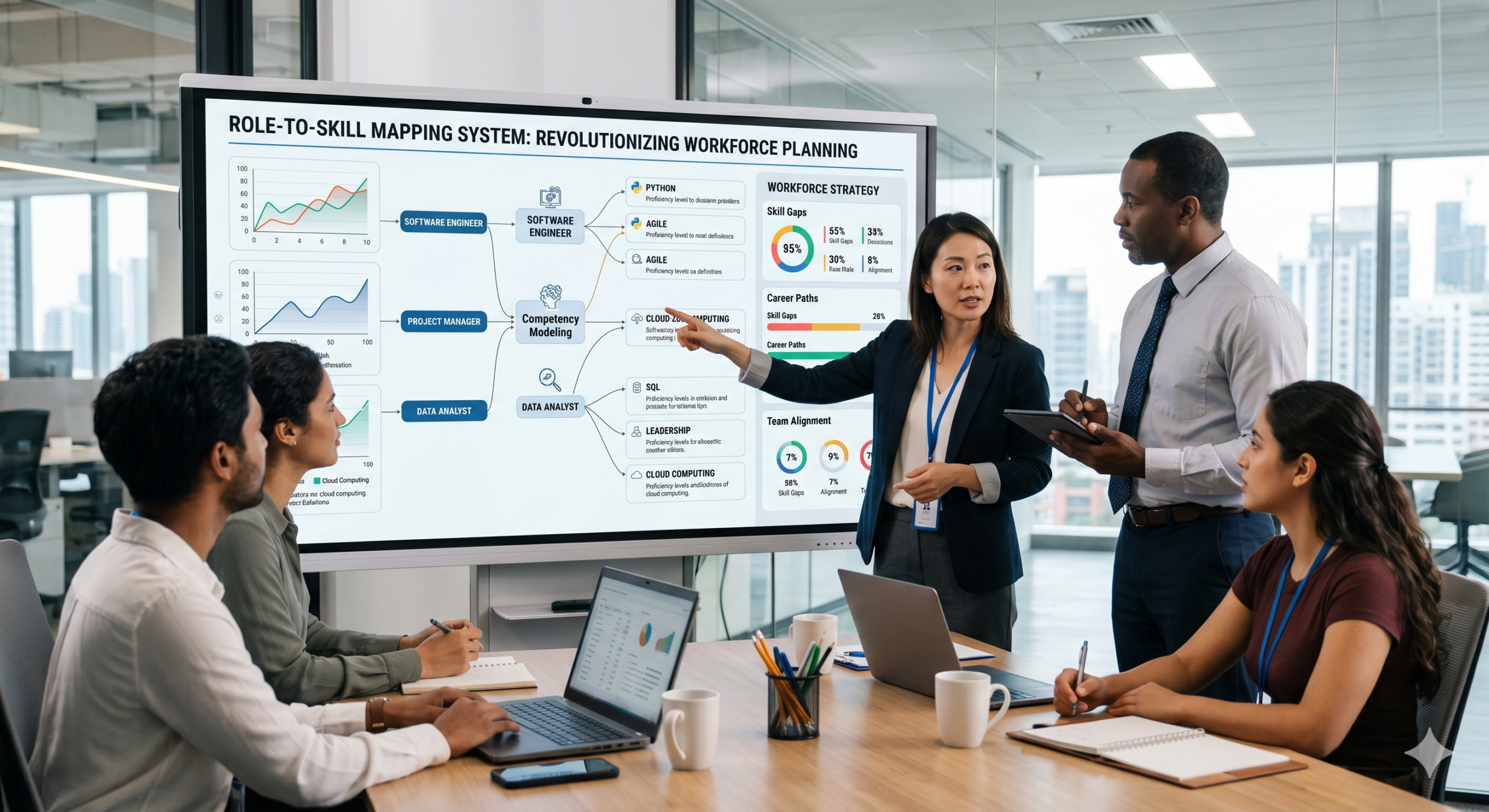
Organizations have always depended on talented people to achieve business goals, serve customers, drive innovation, and maintain a competitive advantage. However, the way organizations identify, evaluate, and develop talent has changed dramatically over the past decade. Traditional hiring and workforce management practices were built around job titles, degrees, certifications, and years of experience. While those factors remain relevant, they no longer provide a complete picture of an employee’s true capabilities or future potential.
As a Human Resources and Recruiting Specialist, I have seen many situations where organizations struggled to find qualified candidates while overlooking talented individuals who already possessed the necessary skills. In many cases, the problem was not a shortage of talent. Instead, the organization lacked a structured way to identify, measure, and connect skills to business needs. Employees often had capabilities that extended far beyond their job descriptions, yet those skills remained hidden because workforce decisions were based primarily on titles rather than competencies.
This challenge has led to the growing adoption of Role-to-Skill Mapping Systems. These systems help organizations move beyond traditional job-based thinking by creating clear connections between roles, skills, competencies, and business objectives. Instead of focusing solely on what position an employee holds, organizations can focus on what that employee is capable of accomplishing. This shift is transforming recruitment, workforce planning, employee development, succession management, and organizational strategy.
At the center of this transformation are two critical workforce management concepts: skills taxonomy and competency modeling. Together, these frameworks provide the foundation for building a skills-based organization that can adapt to changing market conditions, emerging technologies, and evolving workforce expectations.
Why Traditional Workforce Models Are Becoming Less Effective
For many years, workforce planning followed a relatively simple formula. Organizations created positions, defined responsibilities, hired candidates, and measured performance against predetermined job requirements. This approach worked reasonably well when industries evolved slowly and career paths followed predictable patterns.
Today’s workforce environment is very different. Technology advances rapidly, customer expectations change constantly, and organizations must adapt faster than ever before. As a result, job roles are evolving at an unprecedented pace. Skills that were highly valuable five years ago may be less relevant today, while entirely new capabilities have emerged as critical business requirements.
Traditional job descriptions often struggle to keep pace with these changes. Many organizations continue to rely on documents that focus heavily on tasks and responsibilities while providing limited insight into the skills and competencies required for long-term success. This creates a disconnect between workforce planning and actual business needs.
Furthermore, job titles can be misleading indicators of capability. Two employees may share the same title but possess significantly different strengths, experiences, and skill sets. Likewise, employees in different departments may possess overlapping competencies that make them suitable for opportunities outside their current roles. Without a structured system for identifying these capabilities, organizations risk overlooking valuable talent and creating unnecessary skill gaps.
Role-to-Skill Mapping Systems address this challenge by shifting attention away from titles and toward measurable capabilities. Instead of asking what position someone holds, organizations begin asking what skills they possess and how those skills contribute to business success.
Understanding Skills Taxonomy and Why It Matters
A skills taxonomy is a structured framework used to organize and classify workforce skills across an organization. Think of it as a common language that enables leaders, managers, recruiters, and employees to discuss capabilities using consistent definitions and terminology.
Without a skills taxonomy, organizations often experience confusion and inconsistency when evaluating talent. Different departments may use different terms to describe similar capabilities. One manager may refer to customer engagement, while another describes stakeholder management and a third focuses on client relationship development. Although these concepts are closely related, inconsistent language makes it difficult to compare skills across teams and identify talent effectively.
A well-designed skills taxonomy eliminates this problem by creating standardized categories and definitions. Technical skills, leadership capabilities, communication skills, analytical competencies, digital expertise, project management abilities, and industry-specific knowledge can all be organized within a structured framework.
The benefits extend far beyond consistency. A skills taxonomy provides visibility into workforce capabilities, helping organizations identify strengths, weaknesses, emerging skill gaps, and future development opportunities. Leaders gain a clearer understanding of what talent exists within the organization and where investments in learning and development may be necessary.
From a recruiting perspective, a skills taxonomy improves hiring accuracy by ensuring that everyone involved in the hiring process evaluates candidates using the same criteria. From a workforce planning perspective, it provides valuable data that supports strategic decision-making and long-term organizational growth.
The Role of Competency Modeling in Workforce Success
While skills taxonomy focuses on organizing and defining capabilities, competency modeling focuses on understanding what successful performance actually looks like within a specific role or career path.
Many people mistakenly use the terms skills and competencies interchangeably. However, they represent different concepts. A skill refers to the ability to perform a specific task, such as conducting interviews, analyzing data, writing code, or managing budgets. A competency goes beyond individual skills by incorporating knowledge, behaviors, attitudes, and personal attributes that contribute to effective performance.
For example, leadership is not simply a skill. It is a competency that includes communication, emotional intelligence, decision-making, coaching, adaptability, strategic thinking, and relationship-building abilities. Together, these elements create a broader picture of what successful leadership looks like within an organization.
Competency modeling helps organizations identify the characteristics that distinguish high performers from average performers. HR professionals often work closely with managers, executives, and top-performing employees to understand which competencies drive success in specific roles. These insights are then used to create competency frameworks that support hiring, performance management, employee development, and succession planning.
One of the greatest advantages of competency modeling is that it creates consistency. Employees understand what is expected of them, managers have clear evaluation criteria, and organizations can align development initiatives with business objectives. This alignment improves performance while creating stronger pathways for career growth and advancement.
How Role-to-Skill Mapping Systems Connect Everything Together
Role-to-Skill Mapping Systems serve as the bridge between skills taxonomies, competency models, and workforce strategy. These systems connect specific roles to the skills and competencies required for success, creating a comprehensive framework for talent management.
Rather than viewing a job as a title on an organizational chart, a Role-to-Skill Mapping System views that position as a collection of capabilities. For example, a Human Resources Manager role may require expertise in recruitment, employee relations, workforce planning, coaching, compliance, communication, and leadership. Each of these capabilities is mapped directly to the role and associated with specific proficiency levels.
This approach creates remarkable transparency throughout the organization. Recruiters gain a clearer understanding of hiring requirements. Managers can identify development opportunities more effectively. Employees gain visibility into career pathways and skill expectations. Executives receive valuable workforce data that supports strategic planning and decision-making.
The result is a workforce management approach that is based on capabilities rather than assumptions, creating stronger alignment between talent strategies and business goals.
Why Skills-Based Hiring Is Gaining Momentum
Organizations around the world are embracing skills-based hiring because traditional hiring methods often overlook qualified candidates. Many talented individuals possess the capabilities needed for success but may not have the expected job title, degree, or industry experience.
As a recruiter, I have frequently encountered candidates whose resumes did not perfectly match a job description yet demonstrated exceptional potential during interviews and assessments. Under traditional hiring models, these individuals might have been screened out before receiving an opportunity to showcase their abilities.
Skills-based hiring changes this dynamic. Instead of focusing primarily on credentials and work history, recruiters evaluate candidates based on demonstrated skills and competencies. This approach broadens talent pools, improves diversity, and increases the likelihood of identifying high-potential candidates.
Organizations benefit because they gain access to a wider range of talent. Candidates benefit because they are evaluated based on their abilities rather than solely on their backgrounds. Ultimately, this creates a more inclusive and effective hiring process.
Supporting Internal Mobility and Employee Growth
One of the most powerful benefits of Role-to-Skill Mapping Systems is their ability to support internal mobility. Many organizations overlook the talent that already exists within their workforce because they lack visibility into employee capabilities.
Employees often develop valuable skills through projects, training programs, volunteer activities, and cross-functional assignments. Unfortunately, these capabilities may not be reflected in job titles or formal position descriptions.
Role-to-Skill Mapping Systems help uncover these hidden strengths. By identifying transferable skills and competency overlaps, organizations can connect employees with new opportunities that align with their capabilities and career goals.
This creates significant benefits for both employees and employers. Employees gain access to meaningful career development opportunities. Organizations reduce recruitment costs, strengthen retention, and build stronger internal talent pipelines.
When employees see clear pathways for advancement, they are more likely to remain engaged and committed to the organization. This improves morale while reducing turnover and succession risks.
Improving Learning and Development Strategies
Organizations invest billions of dollars in learning and development programs each year. However, many training initiatives fail to deliver meaningful results because they are not aligned with actual workforce needs.
Role-to-Skill Mapping Systems help solve this problem by identifying skill gaps at both the individual and organizational levels. Learning programs can then be designed to address specific development needs rather than providing generic training experiences.
For example, if an organization plans to expand its use of artificial intelligence, workforce data may reveal gaps in data literacy, analytics, or digital skills. Learning initiatives can then focus on building these capabilities before they become critical business challenges.
Employees also benefit because they gain greater clarity regarding development priorities. Rather than guessing which skills will support career advancement, they can focus on capabilities that are directly connected to future opportunities.
This targeted approach improves learning outcomes while maximizing the return on investment from training programs.
The Growing Importance of Workforce Planning
Workforce planning has traditionally focused on staffing levels and headcount projections. While those metrics remain important, modern workforce planning increasingly focuses on capabilities rather than simply the number of employees.
Business leaders must understand which skills will be required in the future and whether those capabilities currently exist within the organization. This requires a more sophisticated approach to workforce analysis.
Role-to-Skill Mapping Systems provide the visibility needed to make informed workforce decisions. Leaders can identify emerging skill gaps, anticipate future talent requirements, and develop strategies to address capability shortages before they impact business performance.
This proactive approach is particularly important in industries experiencing rapid technological change. Organizations that understand their workforce capabilities are better positioned to adapt, innovate, and compete effectively.
Challenges Organizations Must Overcome
Although the benefits of Role-to-Skill Mapping Systems are substantial, implementation is not without challenges. Many organizations underestimate the complexity involved in building and maintaining a comprehensive skills framework.
One common mistake is creating overly complicated models that contain hundreds of skills and competencies. While comprehensive frameworks may seem appealing, they often become difficult to manage and maintain. Simplicity and usability are essential for long-term success.
Another challenge involves keeping skills data current. Workforce capabilities evolve continuously as employees gain new experiences, complete training programs, and adapt to changing business needs. Organizations must establish processes for regularly updating skill profiles and competency frameworks.
Leadership support is also critical. Successful implementation requires collaboration across HR, talent acquisition, learning and development, business units, and executive leadership. Without organizational commitment, even the most sophisticated systems can fail to deliver meaningful results.
Final Thoughts
The workforce is undergoing a significant transformation, and organizations can no longer rely solely on job titles, educational credentials, and years of experience to understand talent. Those factors remain important, but they provide only a partial view of an employee’s true capabilities and future potential.
Role-to-Skill Mapping Systems represent one of the most important advances in modern workforce management because they help organizations see talent more clearly. By connecting roles, skills, competencies, and business objectives, these systems create a stronger foundation for hiring, workforce planning, employee development, and organizational growth.
Skills taxonomies establish a common language. Competency models define successful performance. Role-to-Skill Mapping Systems bring these elements together into a unified framework that supports better decision-making at every level of the organization.
As businesses continue to navigate rapid technological change, evolving workforce expectations, and increasing competition for talent, organizations that invest in understanding and developing workforce capabilities will be better positioned for long-term success. The future belongs to organizations that recognize talent not by job titles alone, but by the skills, competencies, and potential that people bring to the workplace every day.
Frequently Asked Questions
What is a Role-to-Skill Mapping System?
A Role-to-Skill Mapping System is a framework that connects job roles to the specific skills and competencies required for successful performance. It helps organizations make better decisions about hiring, development, workforce planning, and career progression.
Why is skills taxonomy important?
A skills taxonomy creates a standardized framework for defining and organizing skills across an organization. It improves consistency, supports workforce planning, and helps leaders identify skill gaps and development opportunities.
How does competency modeling differ from skills taxonomy?
Skills taxonomy focuses on organizing and classifying skills. Competency modeling focuses on identifying the behaviors, knowledge, attitudes, and capabilities that drive successful performance within a role.
How do Role-to-Skill Mapping Systems improve hiring?
These systems allow recruiters to evaluate candidates based on demonstrated capabilities rather than relying solely on job titles, degrees, or years of experience. This leads to better hiring decisions and broader talent pools.
Can Role-to-Skill Mapping Systems improve employee retention?
Yes. Employees gain greater visibility into career paths and development opportunities. This encourages engagement, internal mobility, and long-term commitment to the organization.
How often should skills frameworks be updated?
Most organizations should review and update skills frameworks annually. However, industries experiencing rapid change may require more frequent updates to maintain accuracy and relevance.
Reference Reading and Further Resources
For readers who want a deeper understanding of Role-to-Skill Mapping Systems, skills taxonomy frameworks, competency modeling, workforce transformation, and skills-based organizations, the following resources provide valuable research, expert analysis, and real-world implementation strategies.
- Deloitte – Skills Frameworks Fuel Skills-Based Organizations
One of the strongest resources available for understanding how skills taxonomies, ontologies, skills graphs, and workforce agility work together inside a modern skills-based organization. It explains how organizations can shift from static job structures to dynamic skills frameworks. - Deloitte Insights – From Jobs to Skills to Outcomes: Rethinking How Work Gets Done
A detailed exploration of how workforce planning is evolving from traditional job-based structures toward skills-based and outcome-driven workforce models. It provides practical examples of how organizations redesign work around skills and capabilities. - Deloitte Insights – Planning Work Through the Lens of Skills
This article explains how companies use skills-based planning to identify talent gaps, improve workforce agility, and support internal mobility through advanced workforce analytics and AI-driven skills mapping. - Deloitte – The Skills-Based Organization: Fueling the 21st Century Enterprise with Skills
A foundational article that explains why organizations are moving away from fixed job structures and toward skills-focused workforce strategies that support innovation, adaptability, and business growth. - Deloitte Insights – A Skills-Based Model for Work
An excellent resource on the future of workforce management, talent marketplaces, adjacent skills, employee mobility, and the growing importance of skills-based workforce ecosystems. - Deloitte Insights – Hidden Workforce Capabilities
This article focuses on identifying overlooked talent inside organizations through skills mapping, capability discovery, and workforce intelligence. It provides valuable insights into breaking down traditional workforce barriers. - Deloitte Insights – Rethinking Skills-Based Talent Models: 4 Paths to Business Value
A practical guide that explains how organizations can translate skills investments into measurable business outcomes, employee engagement improvements, leadership readiness, and workforce mobility. - Harvard Business Impact – The Fluid Future of Work: Rethinking Roles in the Age of Intelligent Machines
A forward-looking article that explores how artificial intelligence is changing workforce planning, leadership development, role evolution, and capability forecasting in modern organizations. - Harvard Business Impact – Building a Disruption-Ready Workforce
This resource examines workforce agility, leadership readiness, adaptability, and the skills organizations need to remain competitive during periods of rapid change and disruption. - Harvard Business Impact – The Global Workforce Is Shrinking. How Should L&D Respond?
A valuable article for HR leaders who want to understand how workforce shortages, career development, retention strategies, and leadership development connect to long-term talent management.