
 By Marcus Ellison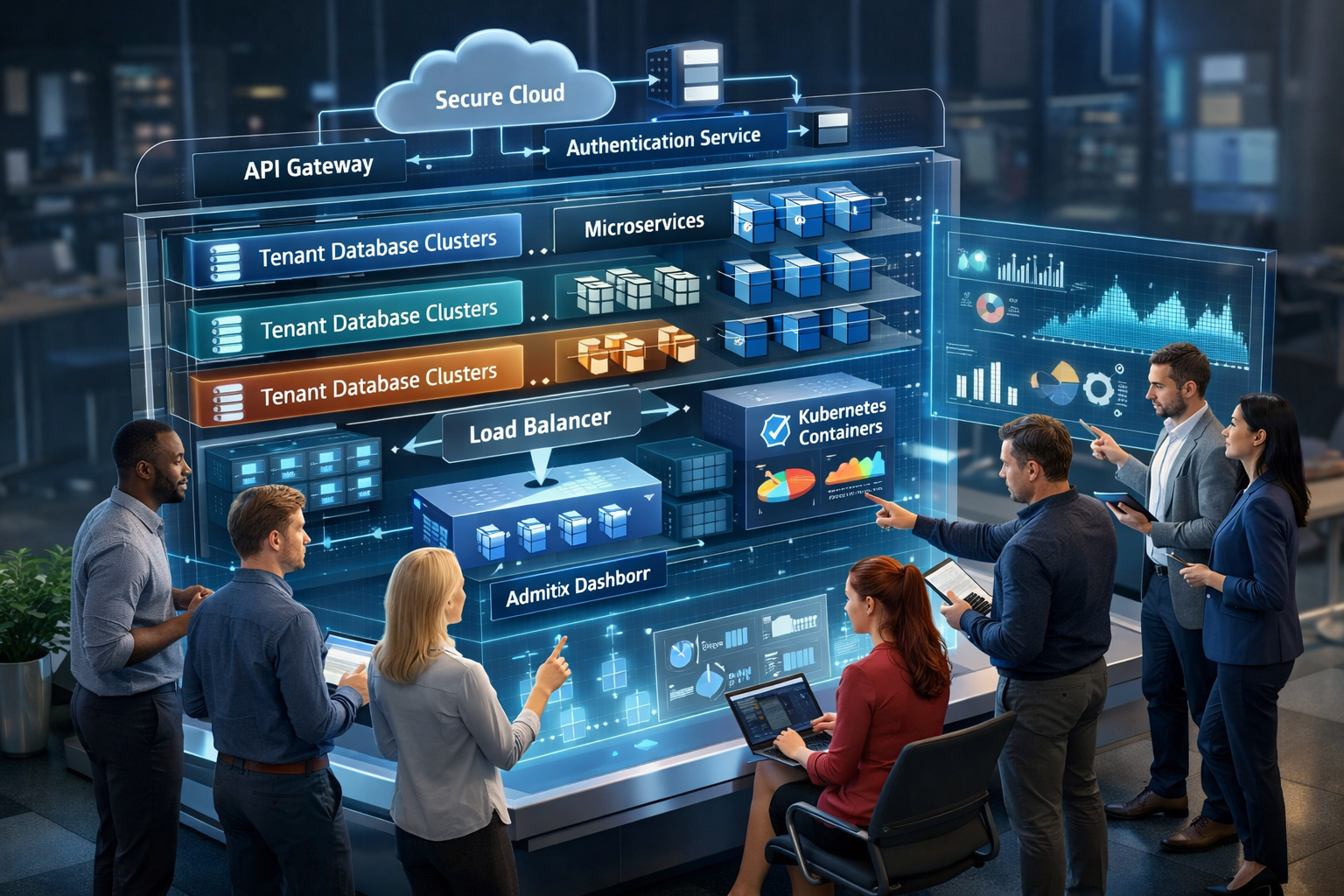
Modern HR software has evolved into cloud-based platforms serving thousands of organizations simultaneously. One of the most important architectural decisions behind these platforms is multi-tenant SaaS design. In the context of HR platform architecture, multi-tenancy enables scalability, cost efficiency, and centralized management while maintaining strict data isolation.
This beginner-friendly yet technical guide explains how It works in HR systems, its architecture patterns, benefits, challenges, security requirements, and best practices for implementation.
It refers to a cloud architecture model where a single software instance serves multiple customers, known as tenants. Each tenant shares the same application infrastructure but has logically isolated data and configurations.
In HR platform architecture, this means:
- One HR application serves multiple companies
- Each company’s employee data remains isolated
- Resources such as servers and databases are shared efficiently
Multi-tenancy is a foundational concept in modern SaaS HR platforms. The concept of multitenancy in software architecture explains how shared infrastructure can securely serve multiple organizations while maintaining logical data isolation.
HR systems manage highly sensitive data, including:
- Employee personal information
- Payroll records
- Tax details
- Benefits enrollment data
- Performance evaluations
It allows HR vendors to serve many clients while maintaining security, compliance, and performance.
Without proper architecture, scaling an HR platform to support thousands of companies would be inefficient and costly.
To understand multi-tenant SaaS design, we must examine its key architectural layers.
The application layer contains:
- HR business logic
- Payroll processing rules
- Leave management workflows
- Recruitment pipelines
In a multi-tenant environment, the same codebase serves all tenants, but tenant-specific configurations are dynamically applied.
The data layer is critical in multi-tenant SaaS design. There are three primary data isolation models:
- All tenants share the same database and tables
- Data is separated using a Tenant ID column
This model is cost-effective but requires strict access controls.
- One database
- Separate schema for each tenant
This provides better logical separation while maintaining cost efficiency.
- Each tenant has its own database
- Strong isolation
- Higher infrastructure cost
Many HR SaaS providers use hybrid strategies depending on client size and compliance needs.
Multi-tenant HR systems are typically deployed in cloud environments using:
- Containerization
- Virtual machines
- Load balancers
- Auto-scaling groups
Cloud infrastructure ensures elasticity and high availability.
When a user logs into a multi-tenant HR platform:
- The system authenticates the user.
- The tenant ID is identified.
- Application logic loads tenant-specific configurations.
- Database queries are filtered by tenant identifier.
- The user sees only their organization’s data.
This dynamic separation ensures logical isolation within a shared environment.
Multi-tenant SaaS design provides significant benefits in HR platform architecture.
Since infrastructure is shared:
- Hosting costs are reduced
- Maintenance is centralized
- Updates are deployed once
This lowers operational expenses for both vendors and customers.
Multi-tenant HR platforms can scale horizontally:
- Add more containers
- Expand database clusters
- Use auto-scaling cloud services
This allows the system to handle payroll cycles, performance review periods, and hiring surges efficiently.
In a multi-tenant SaaS model:
- Bug fixes are deployed globally
- Security patches apply to all tenants
- Feature updates roll out simultaneously
This ensures consistency and reduces technical debt.
Because the architecture is centralized, development teams can:
- Introduce AI-driven analytics
- Add compliance automation
- Improve reporting features
Without maintaining multiple software versions.
Security is the most critical aspect of multi-tenant SaaS design, especially in HR systems.
Strict tenant isolation is enforced through:
- Tenant ID validation
- Row-level security
- Schema separation
- Database-level controls
Any failure in isolation can result in data leakage.
HR SaaS platforms must implement:
- Encryption in transit (TLS)
- Encryption at rest
- Secure key management
Sensitive payroll and employee data must remain protected.
Multi-tenant systems use:
- Role-Based Access Control (RBAC)
- Multi-Factor Authentication (MFA)
- Single Sign-On (SSO)
These controls limit unauthorized access.
HR platforms must comply with:
- Data protection regulations
- Labor laws
- Tax reporting requirements
Multi-tenant architecture must support audit logging and regulatory reporting.
Because multiple tenants share infrastructure, performance management is essential.
Load balancers distribute traffic evenly across servers to prevent overload.
The system may limit:
- API calls per tenant
- Database query rates
- Background processing limits
This prevents one tenant from consuming excessive resources.
Common data such as configuration settings can be cached to reduce database load.
One challenge in multi-tenant SaaS design is balancing standardization with customization.
HR platforms must support:
- Custom payroll rules
- Country-specific compliance
- Organization-specific workflows
- Configurable dashboards
This is typically achieved through:
- Metadata-driven configurations
- Feature flags
- Tenant-specific settings stored in configuration tables
This approach allows flexibility without duplicating code.
Understanding the difference helps clarify design choices.
- Dedicated infrastructure per client
- Maximum isolation
- Higher cost
- Shared infrastructure
- Logical isolation
- Cost efficiency
- Easier updates
Most modern HR SaaS platforms use multi-tenant design because it supports growth and operational efficiency.
Despite its advantages, multi-tenant HR platform architecture introduces complexity.
Improper query filtering can expose one tenant’s data to another.
Testing must account for:
- Tenant-specific configurations
- Different compliance rules
- Varying data volumes
Moving from single-tenant to multi-tenant architecture requires:
- Data restructuring
- Schema redesign
- Security validation
Careful planning is essential.
To build a secure and scalable multi-tenant SaaS design, organizations should follow best practices:
- Enforce strict tenant identification at every request
- Implement automated security testing
- Use database-level row security
- Monitor tenant resource usage
- Separate configuration from code
- Use centralized logging and monitoring
- Perform regular compliance audits
Following these practices reduces operational risks.
Multi-tenant HR platform architecture continues to evolve.
Emerging trends include:
- Serverless HR modules
- AI-driven workforce analytics
- Event-driven microservices
- Global multi-region deployments
- Zero Trust security models
These innovations enhance scalability, resilience, and security.
Multi-tenant SaaS design is a cornerstone of modern HR platform architecture. It allows HR software providers to serve multiple organizations through a shared yet secure infrastructure.
By implementing proper tenant isolation, encryption, scalability mechanisms, and compliance controls, multi-tenant HR systems can deliver:
- Cost efficiency
- High performance
- Secure data handling
- Continuous innovation
For organizations building or selecting HR software, understanding multi-tenant SaaS design is essential. It ensures the platform can scale, protect sensitive employee data, and adapt to evolving business needs.
A well-architected multi-tenant HR platform does not just support operations. It becomes a strategic asset that enables workforce management at scale while maintaining security, flexibility, and long-term sustainability.